Environmental Sustainability
Discover how RGS weaves sustainability into campus life, curriculum, and community through solar energy, edible gardens, biodiversity projects, and more.
The RGS Green Strategic Plan maps out a holistic and whole-of-school effort to support Singapore’s national agenda on sustainable development. It aims to make environmental sustainability a key theme through the 4Cs: Campus; Curriculum; Culture and Community (e.g. partnerships beyond school.)
Learning Through Biophilia at RGS
The RGS campus lies within 1 km of the Central Catchment Nature Reserve, one of Singapore’s most significant remnants of native rainforest. This close connection to nature provides a valuable opportunity for the school to support local biodiversity, national conservation plans and the global climate crisis through deepened environmental learning.
The RGS Biophilic Master Plan can be put into practice here and it demonstrates our commitment to drive environmental sustainability in the school
The master plan, Learning Through Biophilia – Bringing Nature into the School Campus, aims to transform RGS into a biodiverse and ecologically sustainable learning environment. It positions the campus as a living laboratory where students can observe ecological processes, participate in citizen science, and develop a stronger understanding of their relationship with the natural world.
Rewilding at Our Wild Garden
Our Wild Garden is the first of several rewilded landscapes planned across the RGS campus. Rather than creating a fixed or highly manicured garden, the design works with natural processes and allows the landscape to change over time.
The layout responds to the site’s existing topography and is anchored by the Rain Tree. Prior to this intervention, the majority of the garden stayed flooded after it rained each time. The topography was altered: the edges of the garden were raised while the middle remained low, especially around the Rain Tree. This directs rainwater to collect only in the middle of the garden, in natural depression called a swale. Plants that tolerate more damp conditions are planted here.
The garden brings together plants that represent a mosaic of habitats inspired by Singapore’s natural landscapes, for example:
Grasslands with low groundcover, tall grasses and wildflowers in sunnier areas
Tropical scrublands featuring ferns, gingers and orchids
A seasonal freshwater swamp under the existing Rain Tree
An urban regenerated forest
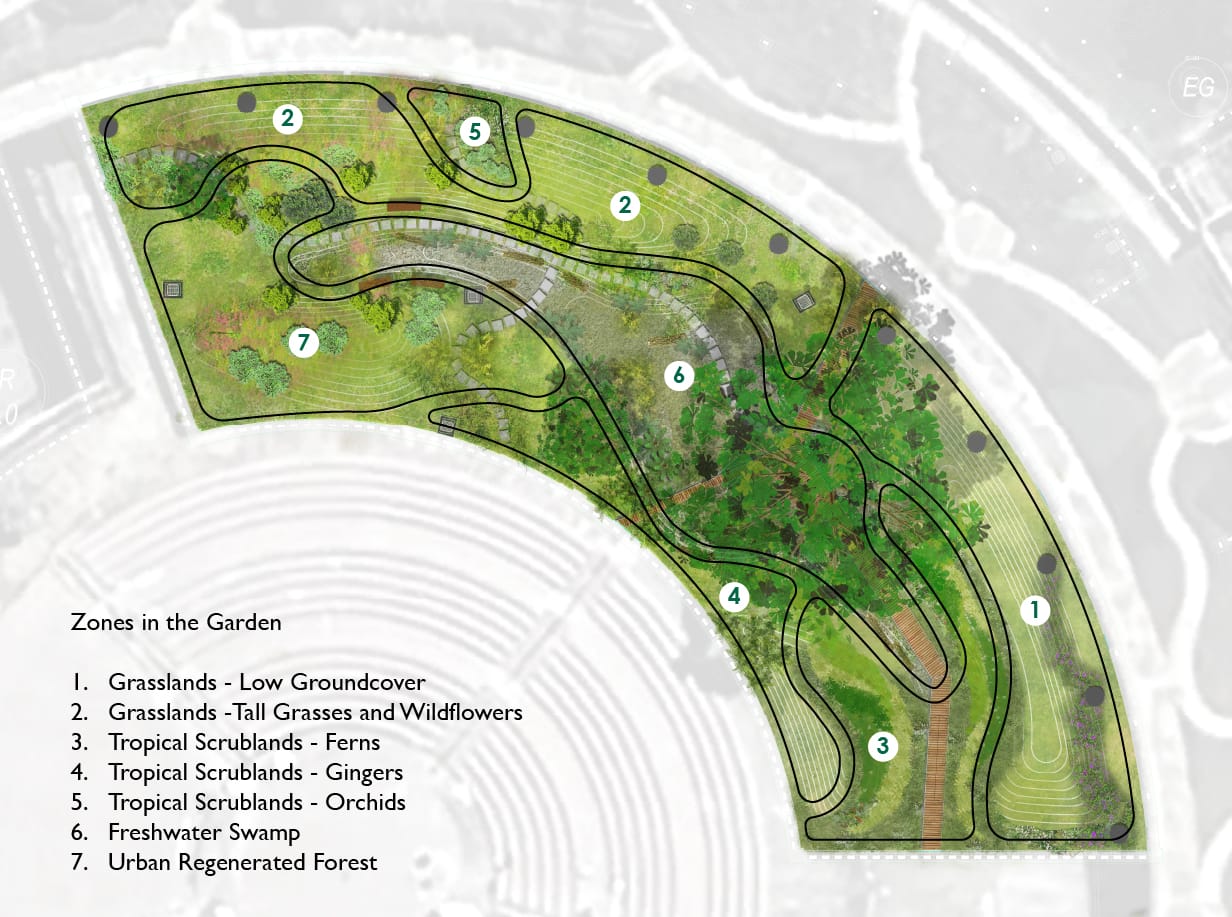
Our Wild Garden with zones inspired by Singapore's natural habitat types
These habitats provide different conditions for plants and wildlife. As vegetation establishes, soils recover and the canopy develops, the garden will continue to evolve. Seeds and wildlife may move between the campus and the nearby nature reserve, helping the school grounds function as an ecological stepping stone through the wider landscape.
A Living Landscape
Rewilding means giving natural processes more space to shape, renews the landscape and and creates wildlife corridors. Maintenance is reduced selectively, while targeted care is still used to support ecological health, safety and access.
Change is therefore an essential part of the garden. Some plants may germinate, flower and complete their life cycle within months, while trees and other long-lived species gradually establish. Areas that are sunny today may become shaded in the future, allowing different plant communities to develop. What visitors see during one visit may not be the same on the next, and this changing character is part of the garden’s life.
Paths guide visitors through the different habitat zones, while changes in elevation, planting structure, texture and moisture create varied experiences for people and opportunities for wildlife.
What Is Biophilic Design?
Biophilic design brings nature into human environments to support health, learning and well-being. At RGS, this includes opportunities to experience natural light, vegetation, water, organic forms, changing seasons and the sounds and movement of wildlife.
The rewilded garden extends these principles beyond the building. It combines the human-centred benefits of biophilic design with an ecosystem-centred approach to rewilding—creating a campus that supports both people and urban biodiversity. In addition, it will create an immersive nature-based learning environment that can seamlessly integrate educational, ecological and aesthetic considerations.
As the campus matures, students and visitors are invited to pause, observe and return regularly. Look closely at how the habitats change, listen for birds and insects, and notice how plants respond to light, rain and shade. Through these everyday encounters, the RGS campus becomes not only a place to learn about nature, but a place to learn through nature.
Other Rewilding Initiatives
Discover how our RGS community is working together to map the campus’s green spaces.
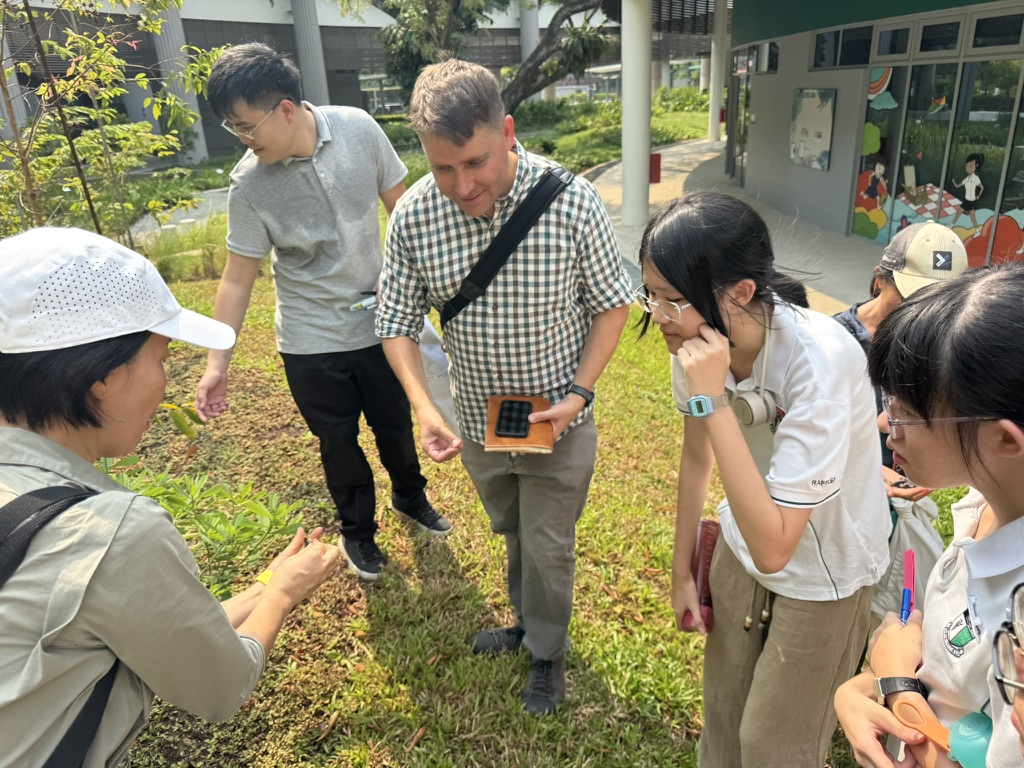
Tree Planting Initiatives
Our Tree planting initiatives have raised awareness about the critical role that trees play in reducing carbon emissions and enhancing biodiversity within school environments.
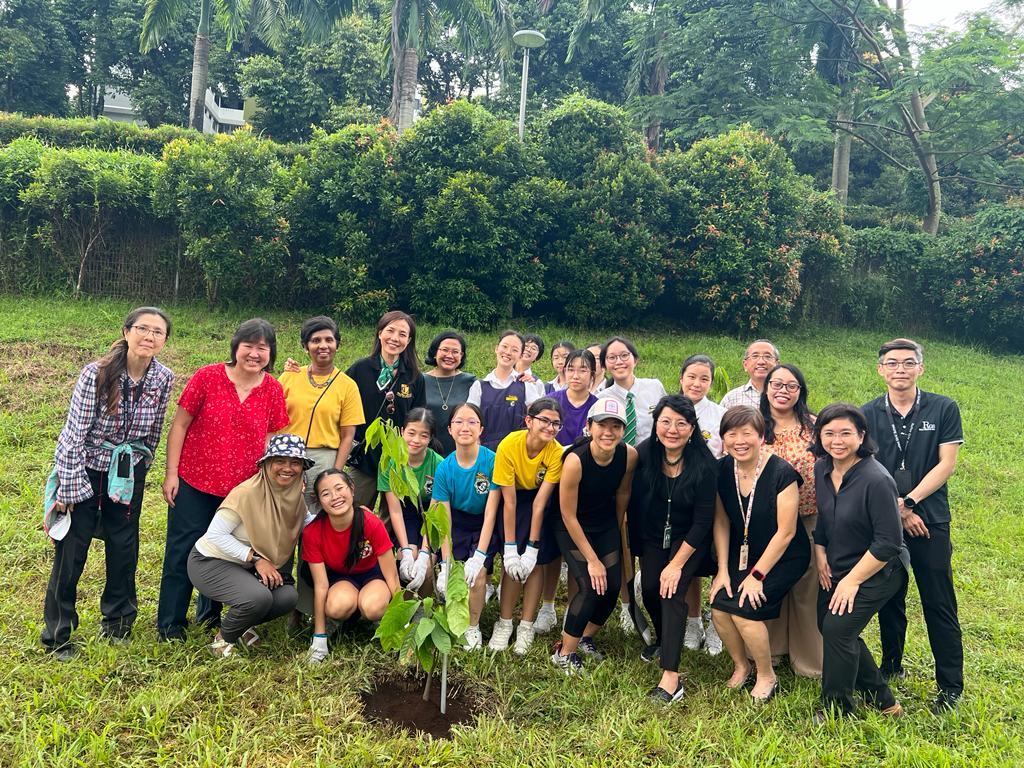
Planting of Cacao Trees @ RGS
As part of RGS Environmental Sustainability efforts, five cacao trees were planted along the strip of land between our school field and Braddell Heights. Ms Janice Wong sponsored a total of 20 cacao trees across the campus, with support from the RGS Alumnae (RGSA).
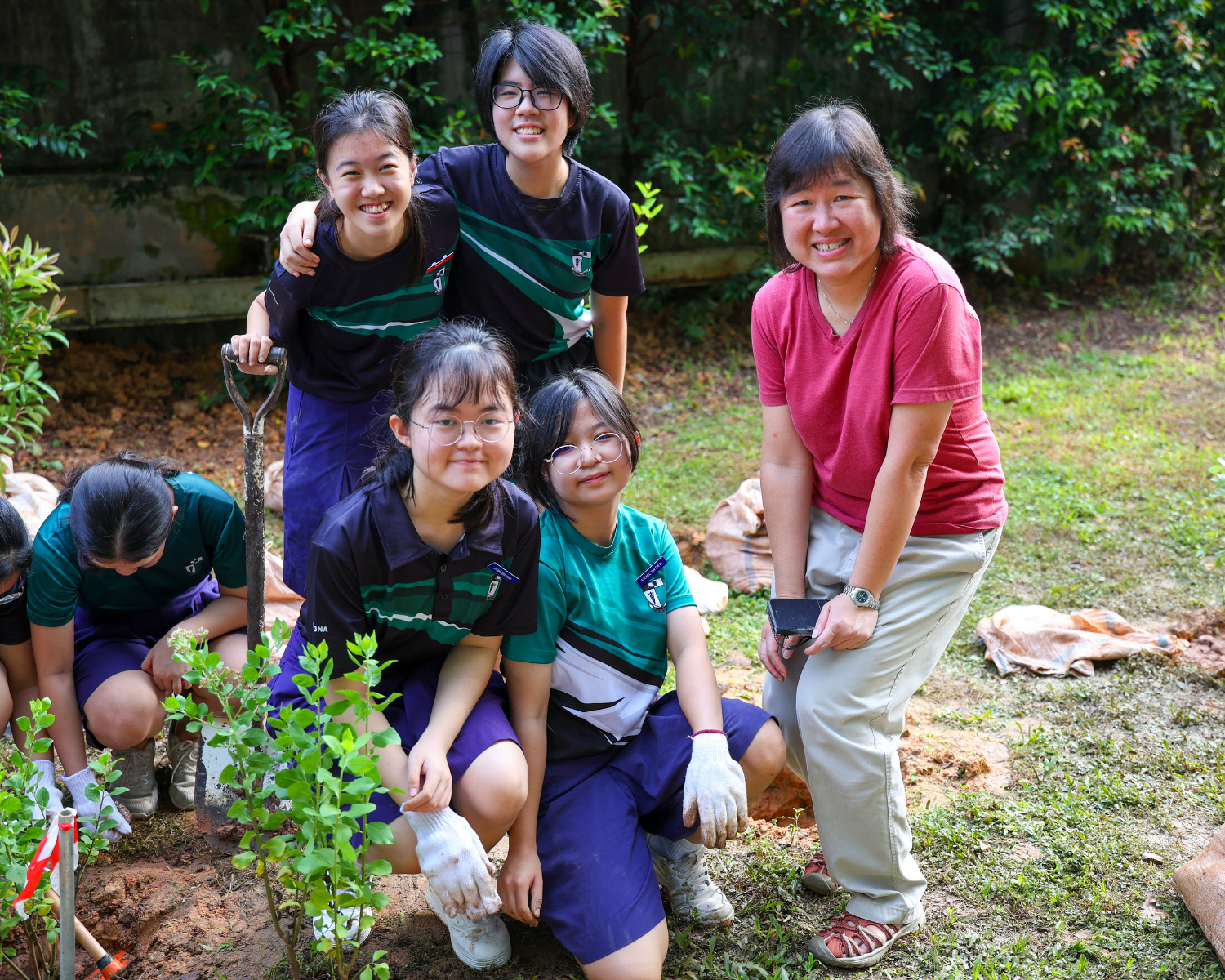
Trees for RGS Project
On 17 October 2024, our SVIA team, Project Carb0n, organised a tree planting session. This initiative aimed to raise awareness about the critical role that trees play in reducing carbon emissions and enhancing biodiversity within school environments.
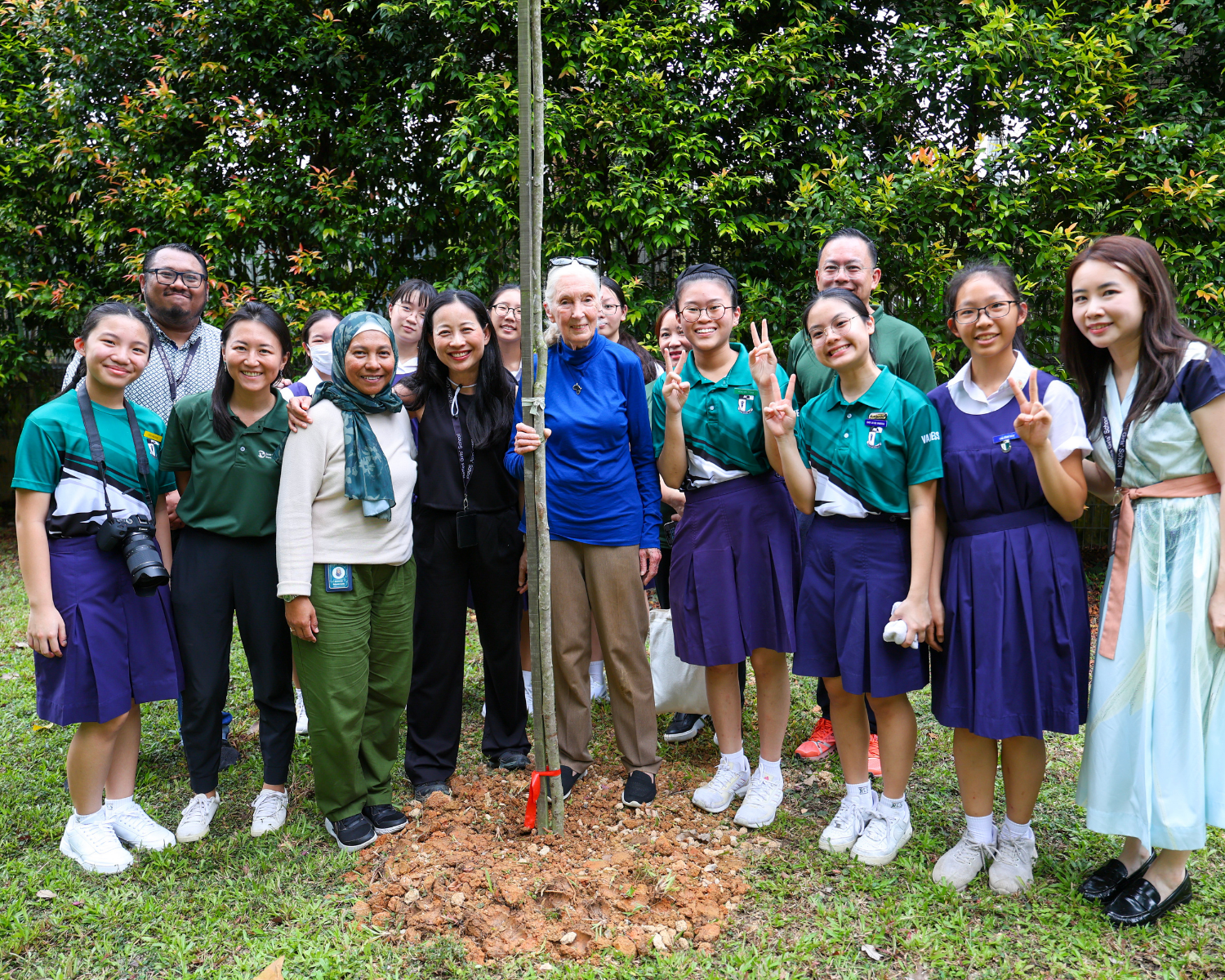
Jane Goodall Institute (Singapore) Roots & Shoots Youth Summit
As part of her tour of Singapore, Dr Jane Goodall visited RGS and generously donated eight trees, which were planted on the school premises.
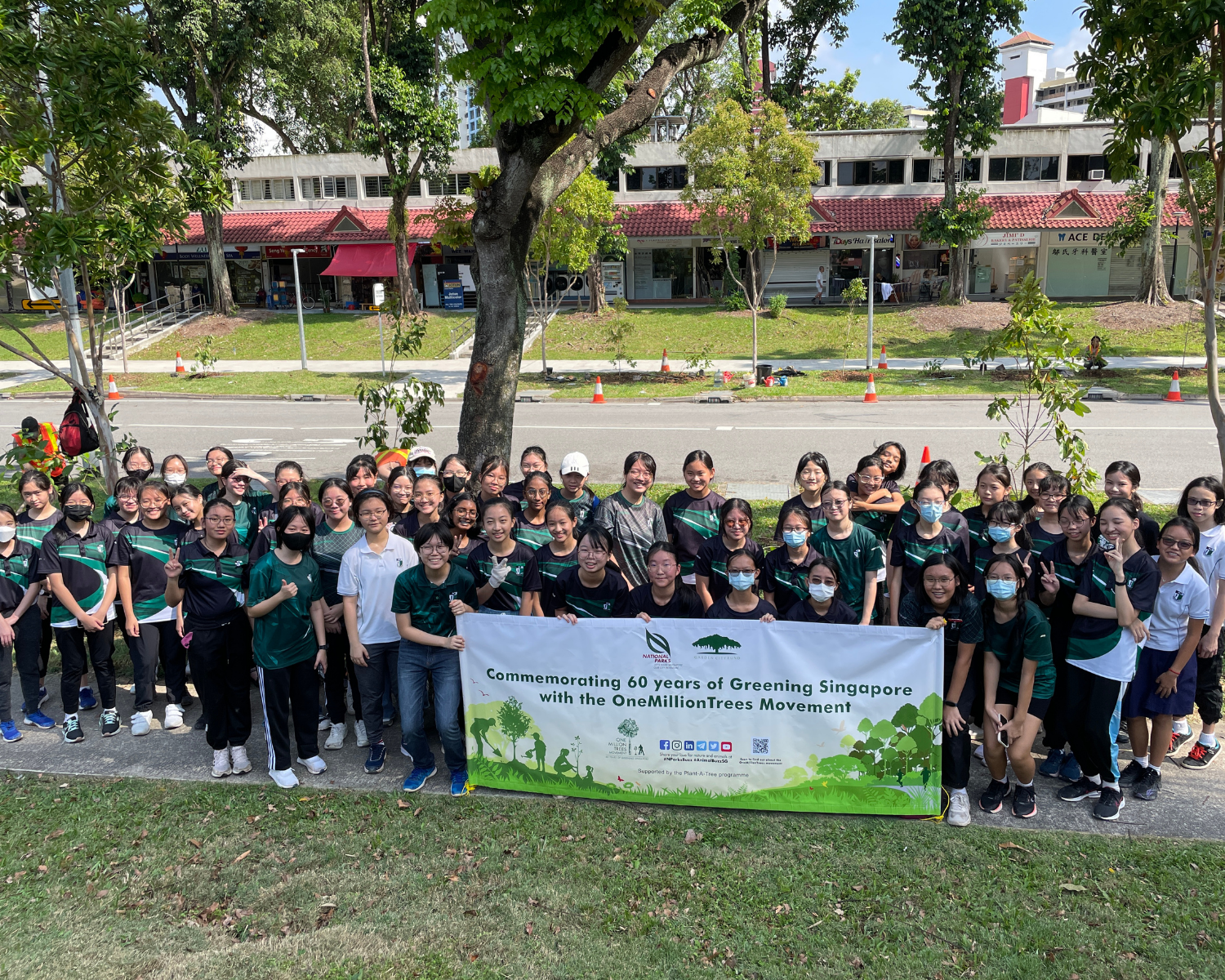
NParks tree planting
57 students from Project Carb0n participated in an NParks tree planting session, planting around 50 trees along Ang Mo Kio Street 32.
Rooftop Edible Garden
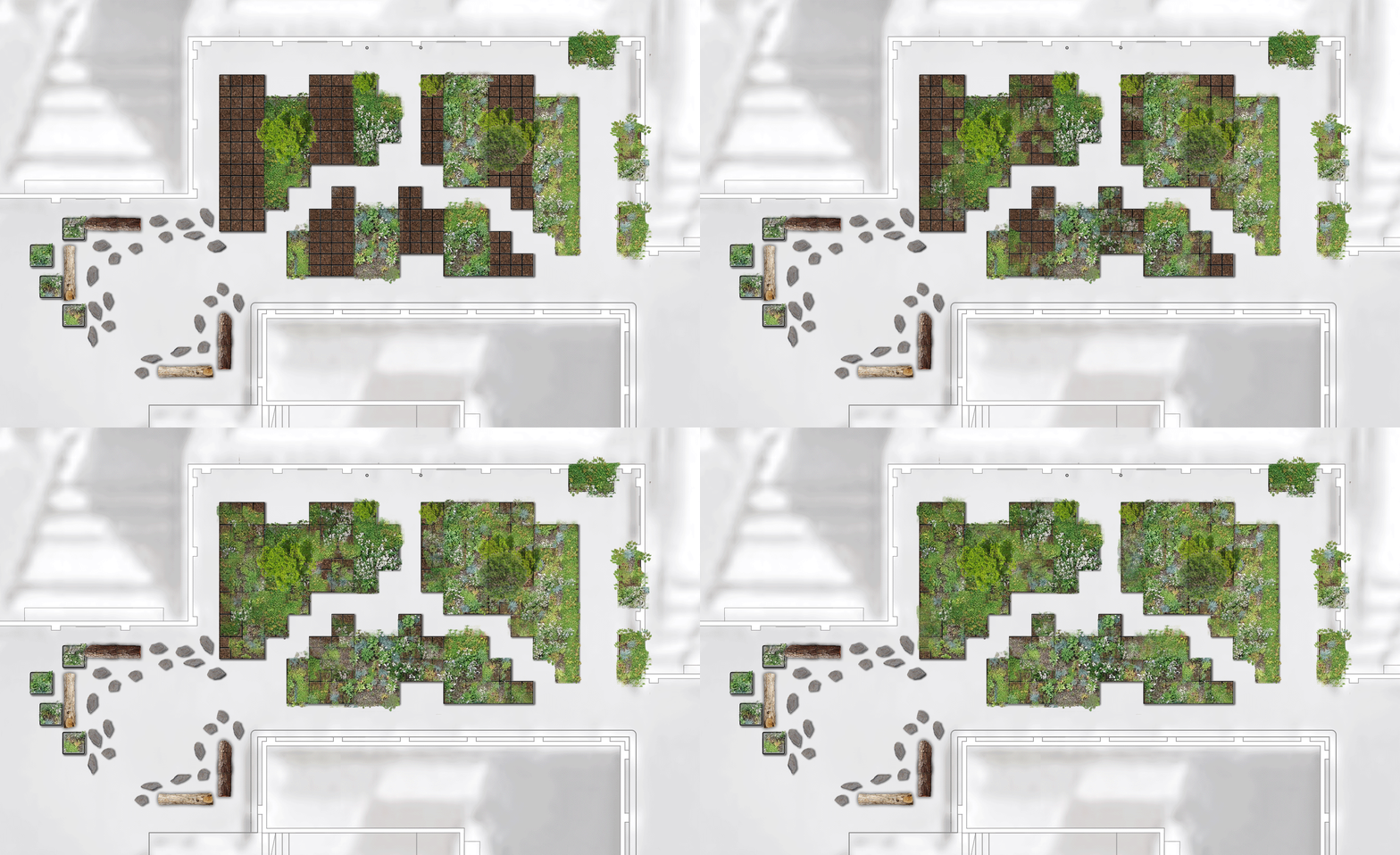
More than just a garden, our rooftop Edible Garden serves as an educational hub for sustainable planting and growth, aiming to nurture 'citizen farmers' among our staff and students.
This green space introduces 'Farm to Table' and 'Direct Source' concepts, encouraging a mindful approach to food. It also sparks a ripple effect, with students and staff becoming ambassadors of sustainability, inspiring families and friends to create edible gardens across the island.
The Environmental Sustainability Committee (ESC), which oversees the garden, enlisted the support of House teachers and student leaders for activities such as weeding, maintenance, and harvesting, with guidance from Edible Garden City. Each House was allocated a garden plot to foster House spirit, with the harvest donated to canteen stallholders and F&N teachers, and available for staff to take home.
The ESC has also collaborated with the Humanities and Science departments to integrate sustainability concepts and use the garden as a learning space.
With the new involvement of our Year 1 classes, students will develop a deeper understanding and commitment to becoming responsible citizens, contributing to a greener and more sustainable environment.
Rooftop Edible Garden Initiatives
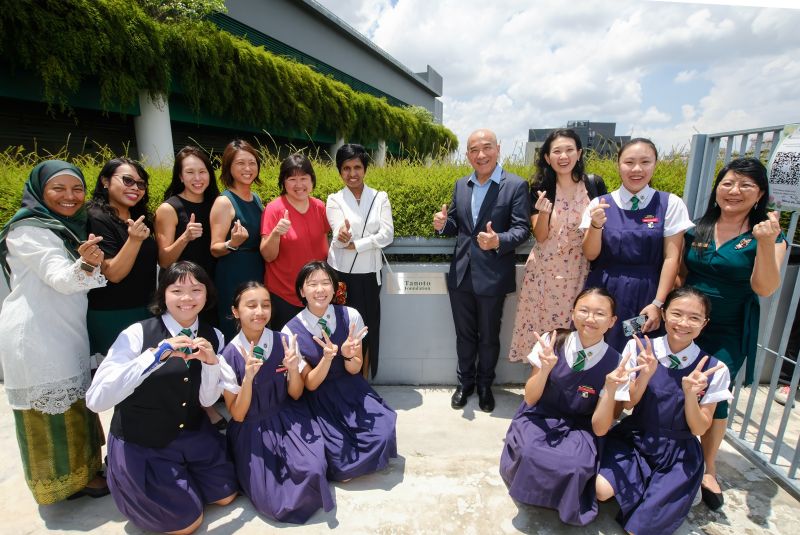
Launch of Rooftop Garden
As we celebrated our 144th Founder’s Day, we marked the occasion with the launch of our Rooftop Edible Garden, sponsored by the Tanoto Foundation. Created as an educational hub for sustainable planting and growth, it aims to nurture 'citizen farmers' among RGS staff and students.
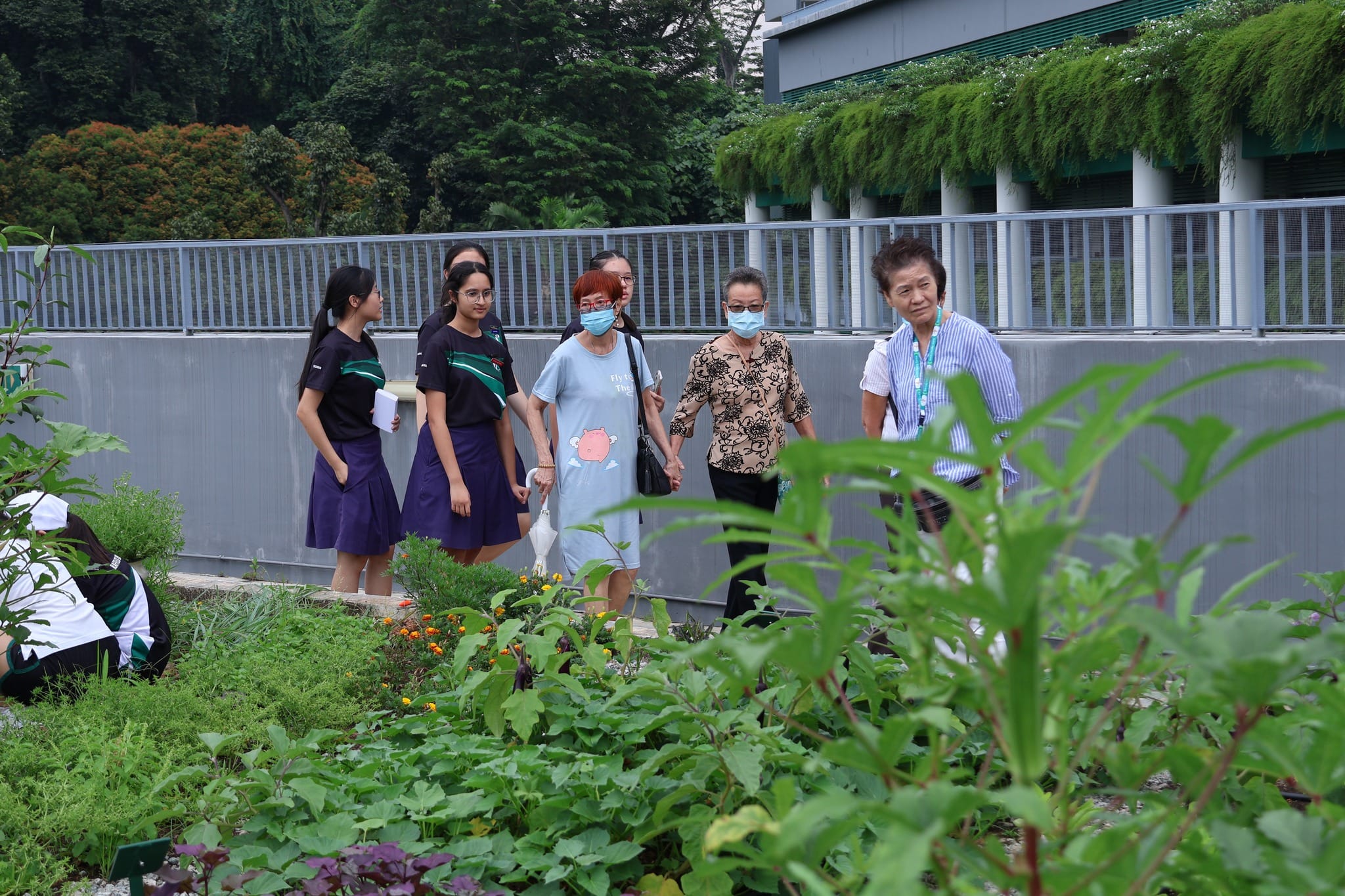
Garden Tour
Our String Ensemble CCA hosted 35 seniors from Fei Yue Active Ageing Centre (Hougang Dewcourt) at our Braddell Campus. The visit ended with a leisurely school tour, where they explored our Edible Garden, Galleria, and the iconic Raffles Tree.
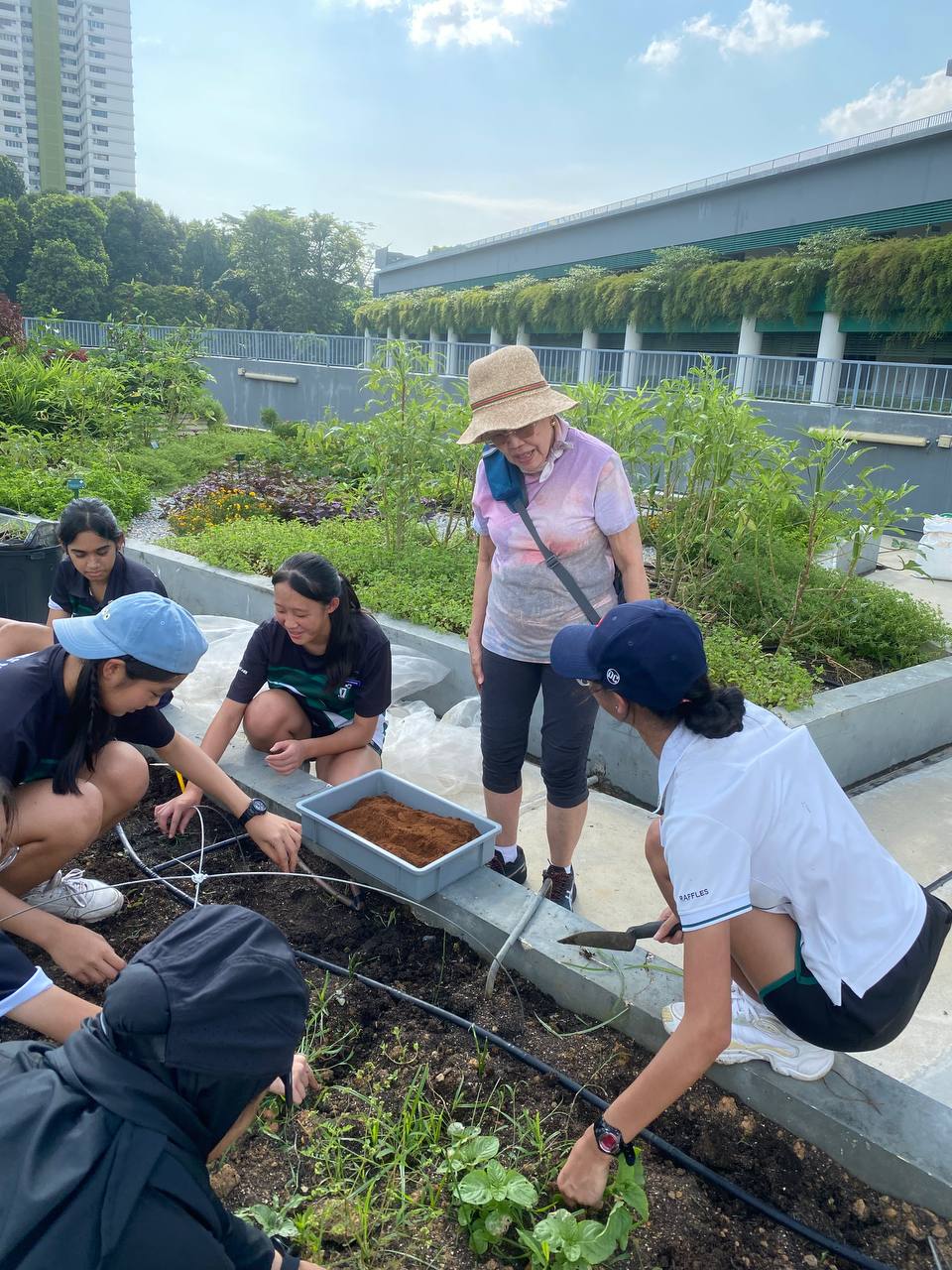
Edible Garden
The RGS Edible Rooftop Garden is a wonderful initiative by Mrs Carmee Lim and the RGS Alumni. It symbolises our commitment to sustainability as well as a living classroom fostering closer connection to nature for our girls.
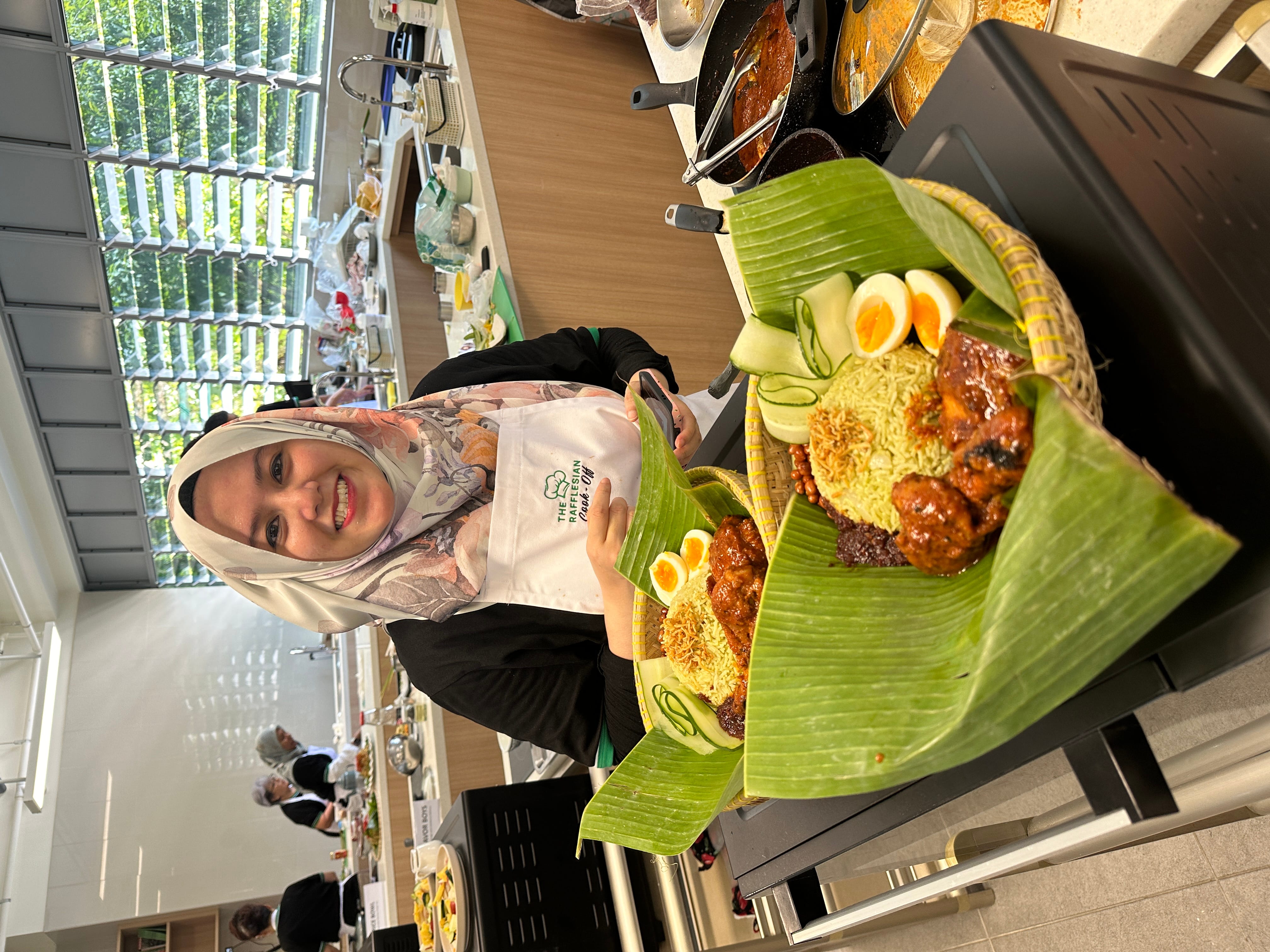
Rafflesian Cook-off
With the theme Celebrating Singapore Heritage Through Heartfelt Recipes, RGSA organised a Cook-off where participants had to incorporate a key ingredient from our Rooftop Garden. These included a bounty of locally grown crops, including lemongrass, roselle, and laksa leaf.
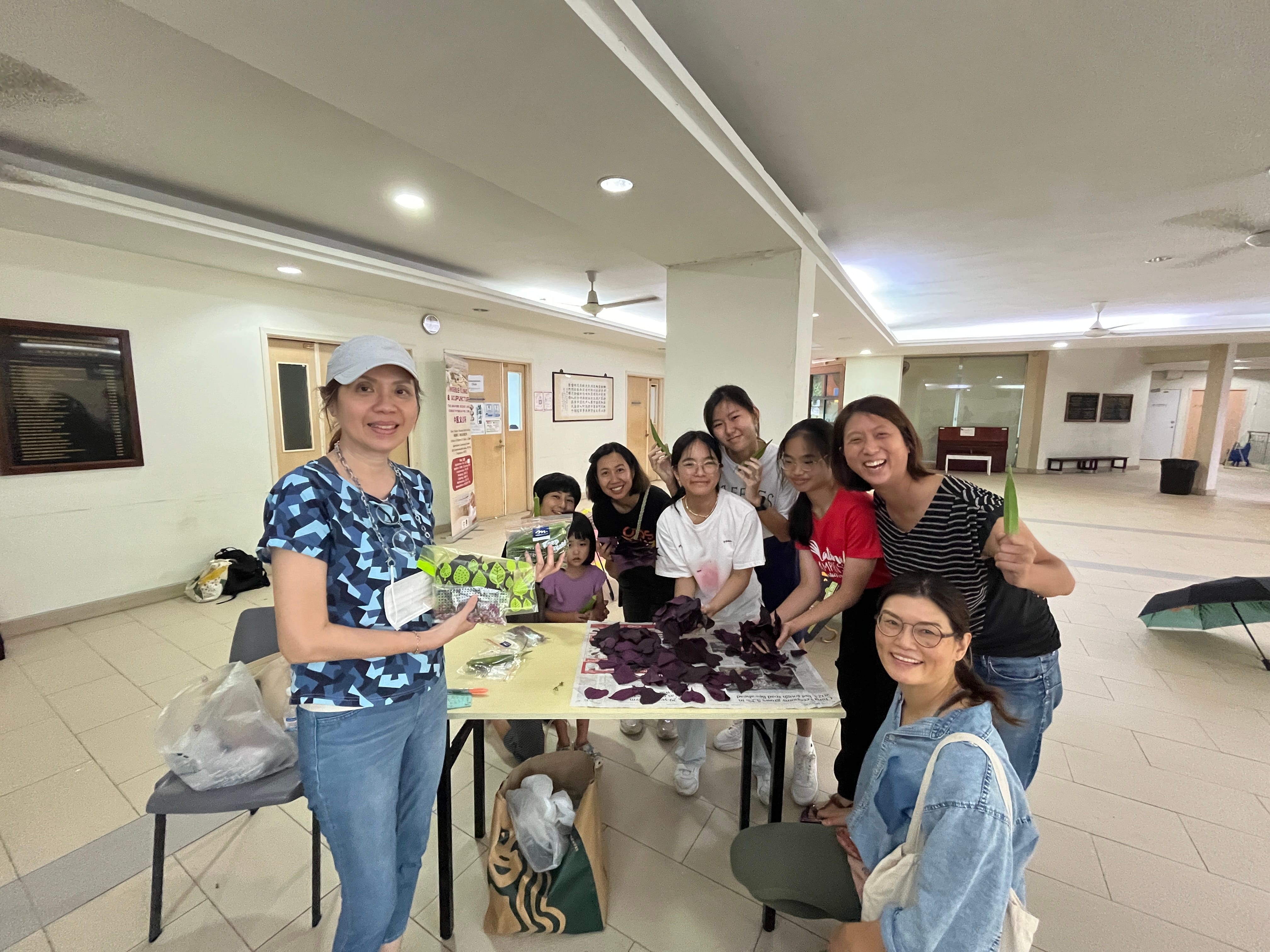
Queenstown Kakis
Our students distributed fresh produce and vegetables from our Garden to the community through Queenstown Kakis.
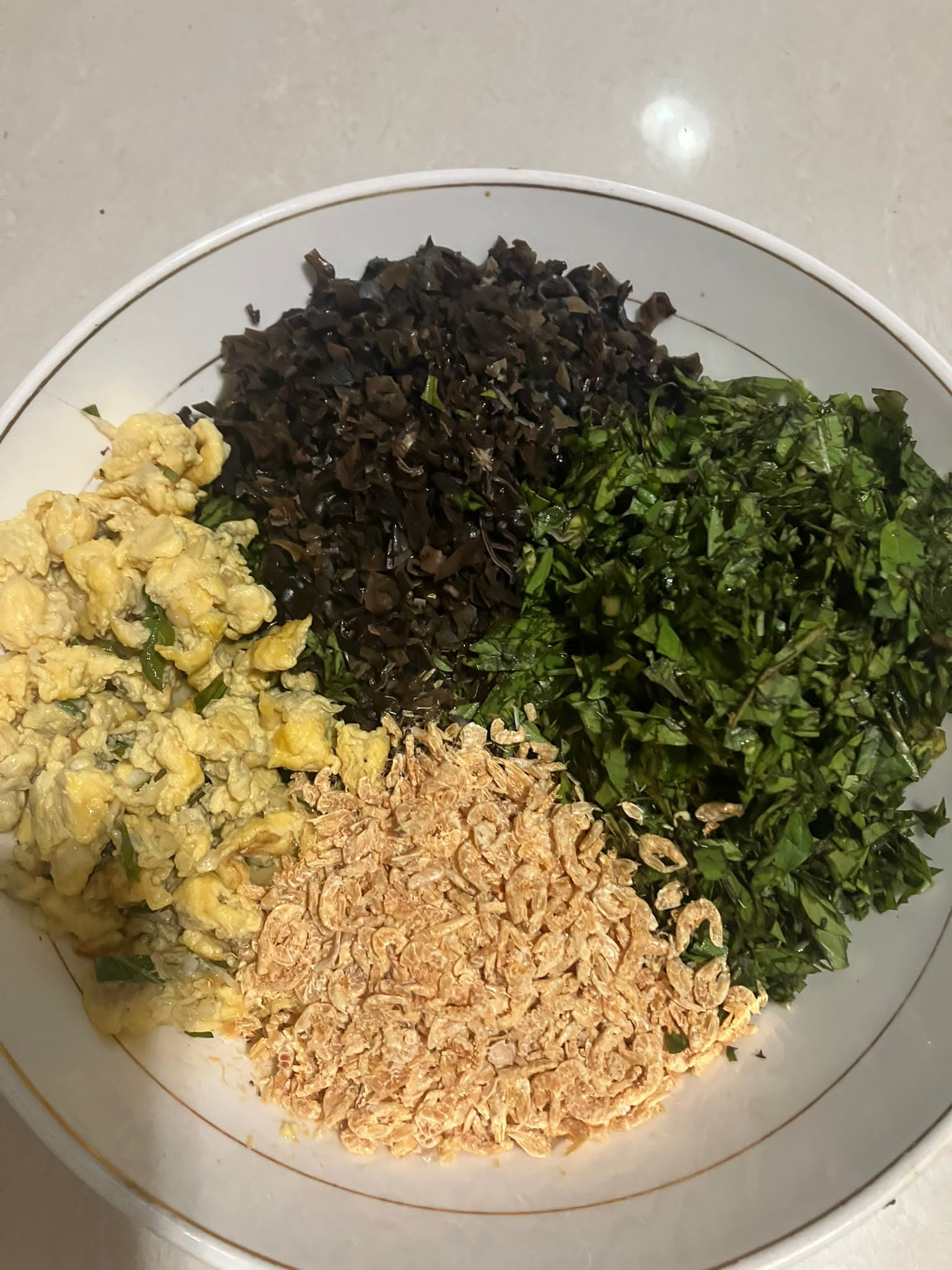
Chinese Dumplings
As part of the MT Fortnight activities, our Chinese Language teacher, Mdm Mu Jun, taught students how to make dumplings using ingredients from our garden.
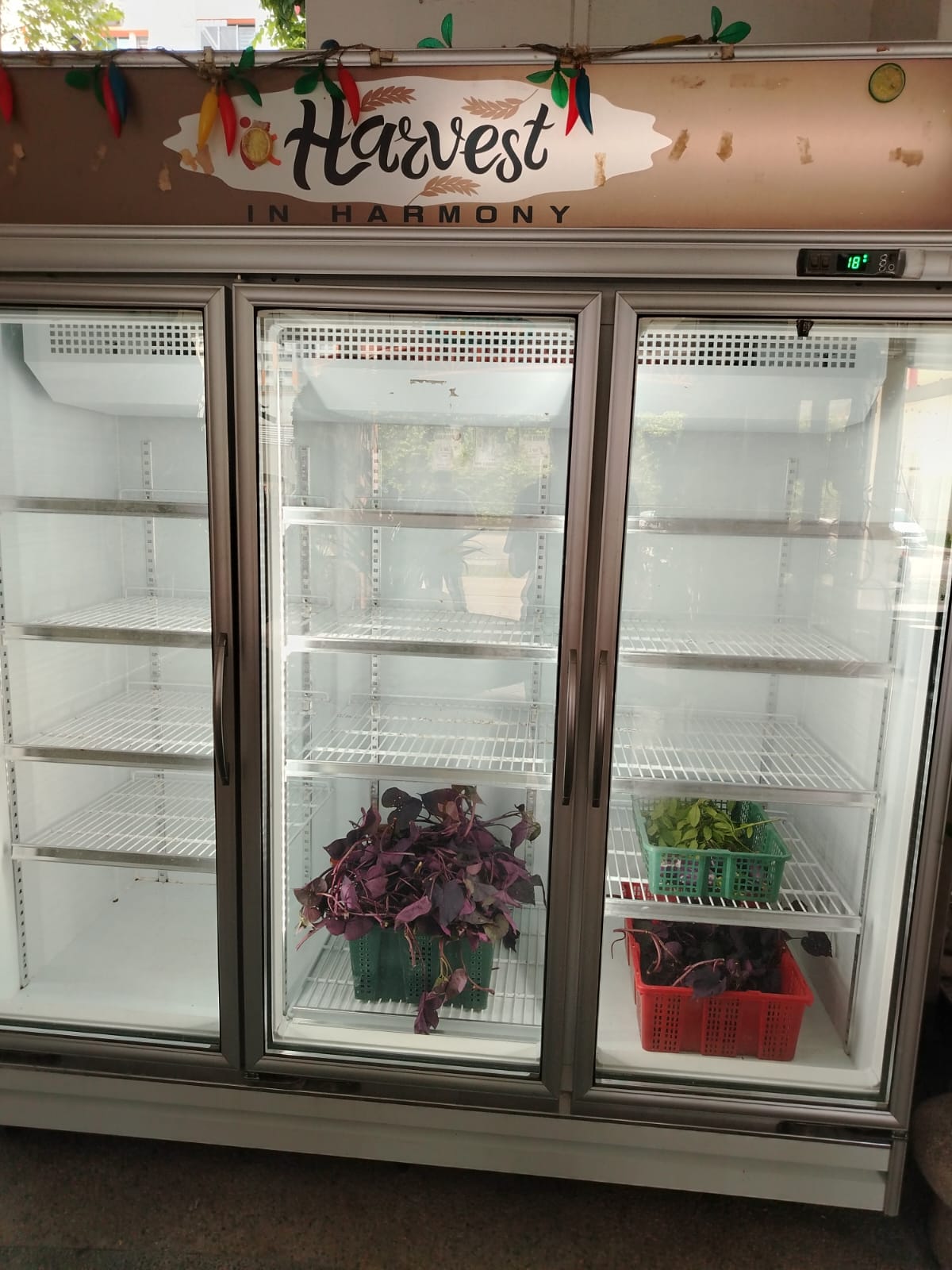
Bishan Green Hub
We shared some of our garden produce with the community fridge at Bishan Green Hub, supporting sustainability and community care.
RGS Earth Week
Earth Week is an annual school event in RGS planned by Cogitare Club for our students. An exciting lineup of events take place during the week to promote awareness of our changing climate, food sustainability and more.
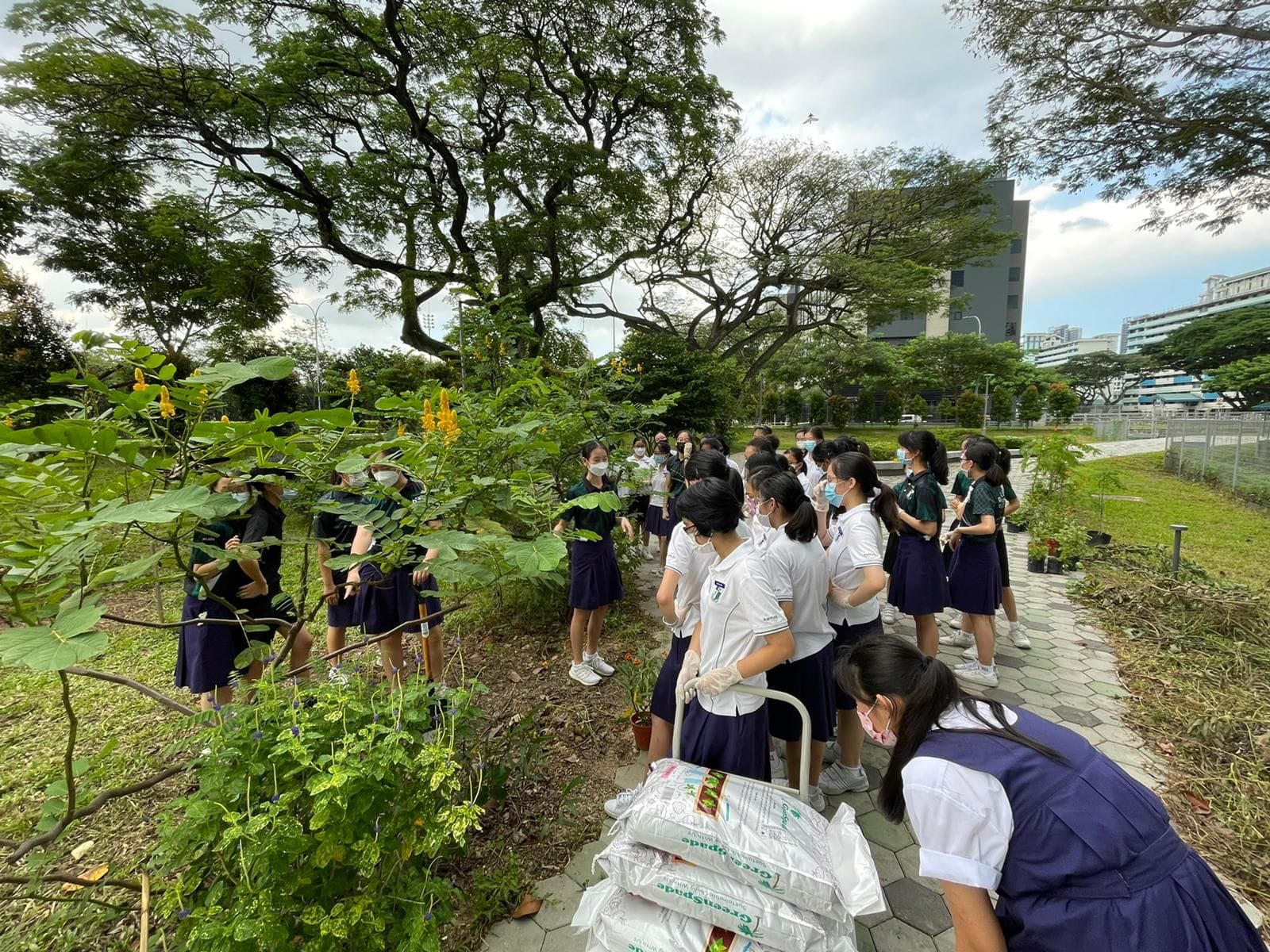
Biodiversity trail
As part of Earth Week 2022, the RGS Cogitare Club launched a biodiversity trail that features the school’s wide variety of biodiversity, with interactive features and scenic spots.
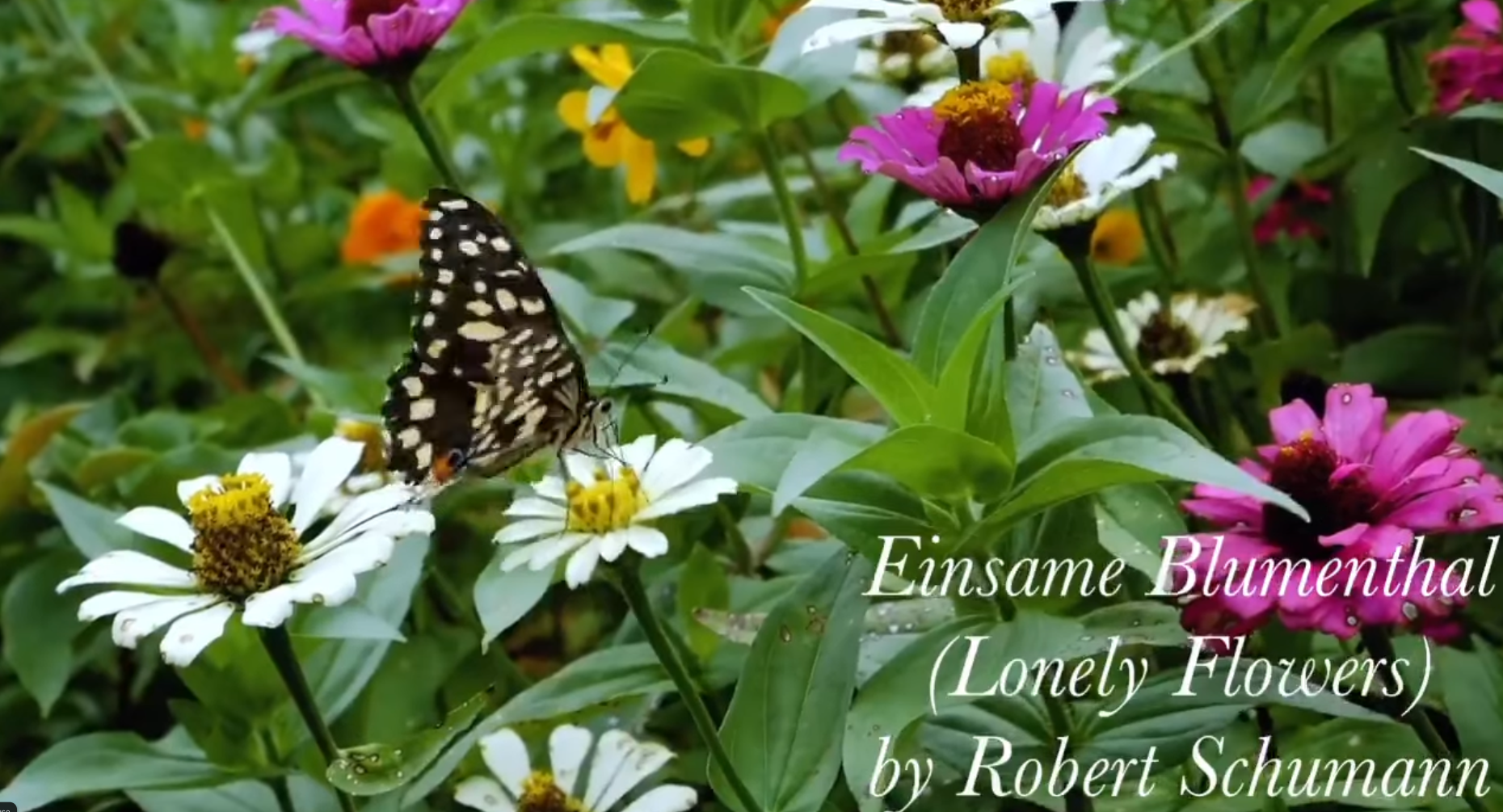
🎵 A Musical Tribute to Earth Week
Indulge in this musical offering to Earth Week with Einsame Blumen (Lonely Flowers) by the Romantic composer Robert Schumann. A musical piece performed Chloe Saw (Class of 2022)
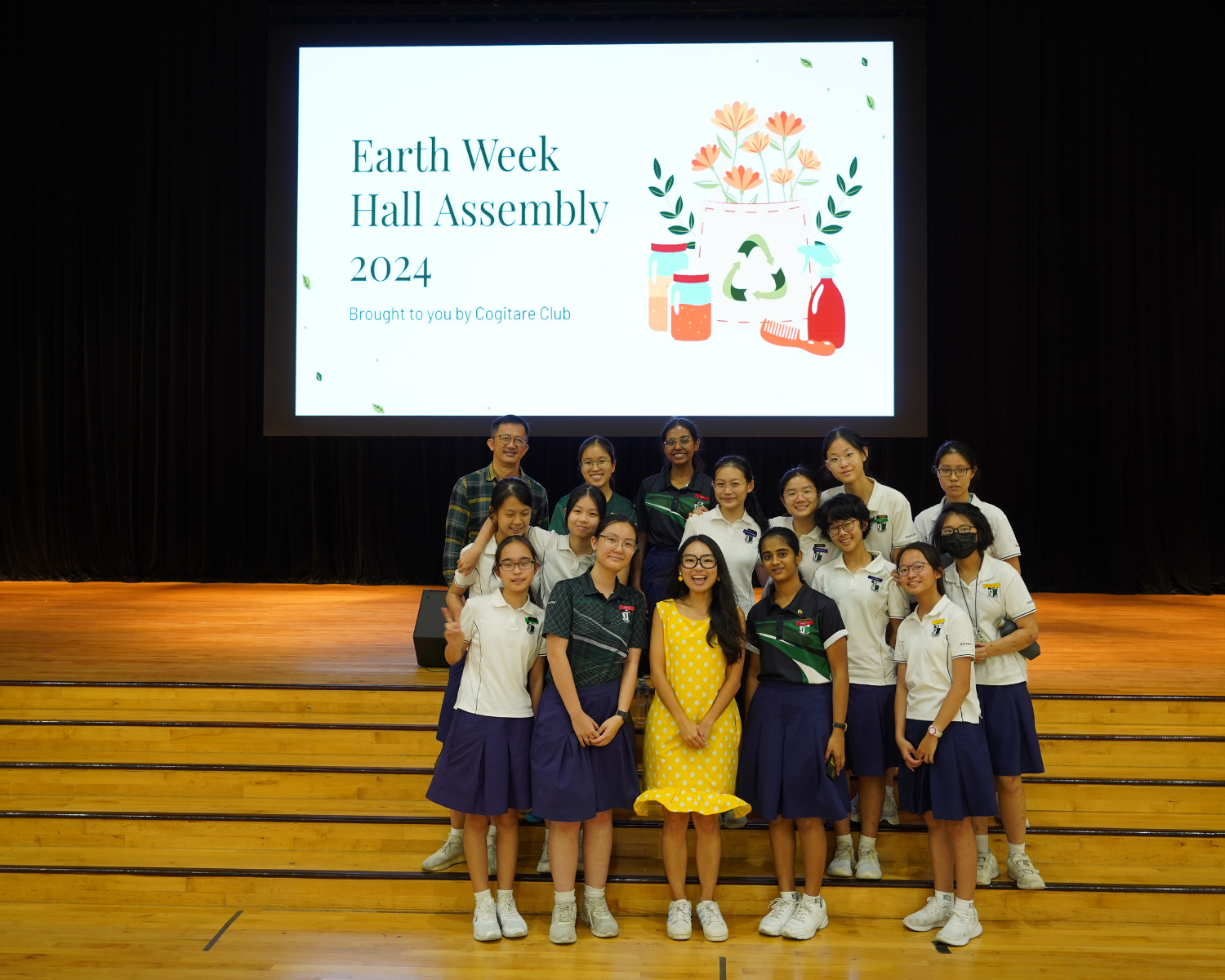
Our Path to a Greener Tomorrow
Themed “Our Path to a Greener Tomorrow”, Earth Week 2024 featured a presentation by environmentalist Ms Kong Man Jing and a special workshop, organised in collaboration with students from Guanyang Secondary School.
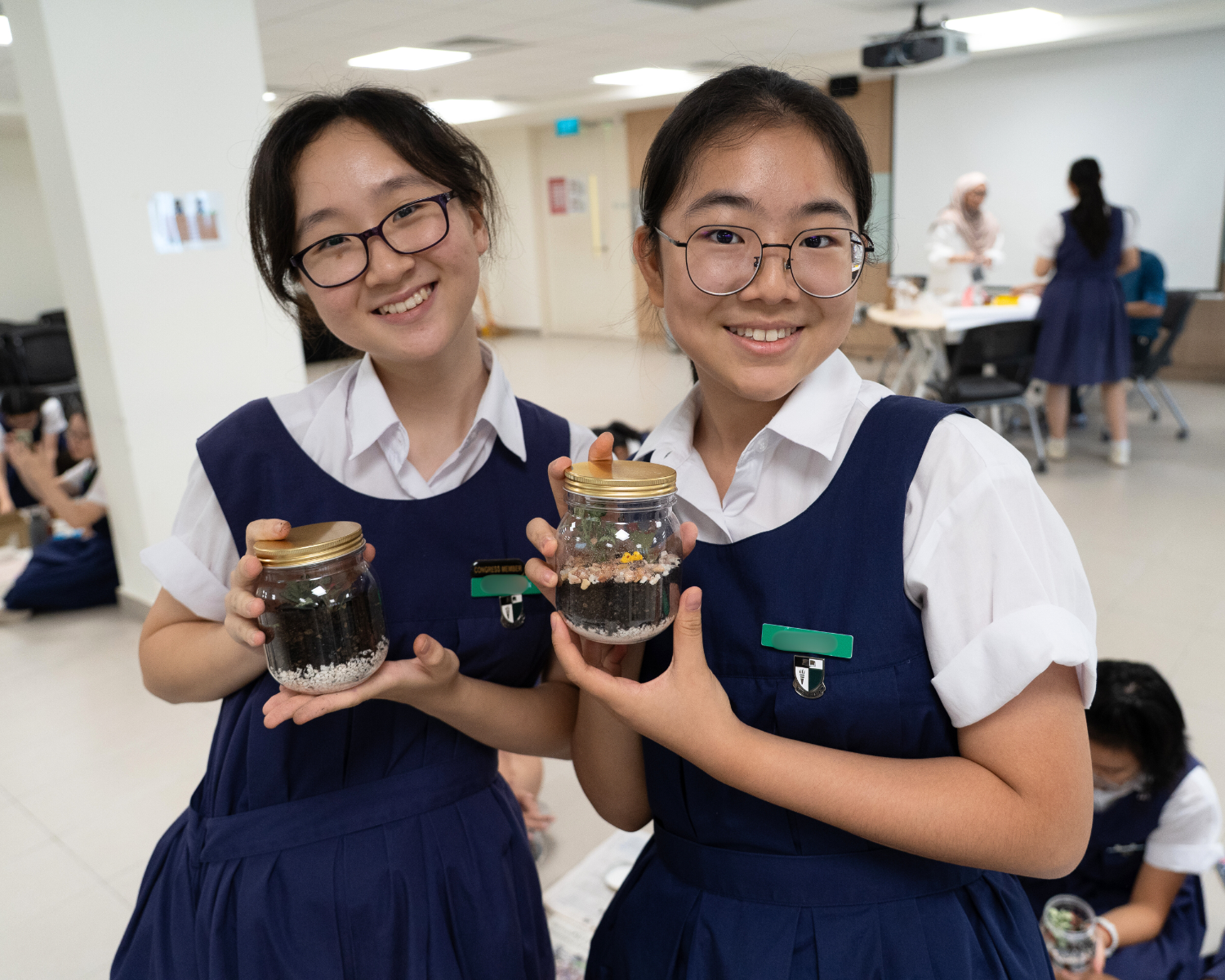
Earth Week 2025
We celebrated Earth Week with the theme Our Power, Our Planet — a powerful reminder that our voices, choices, and actions can shape a greener, more sustainable future.
NSS ESN Events
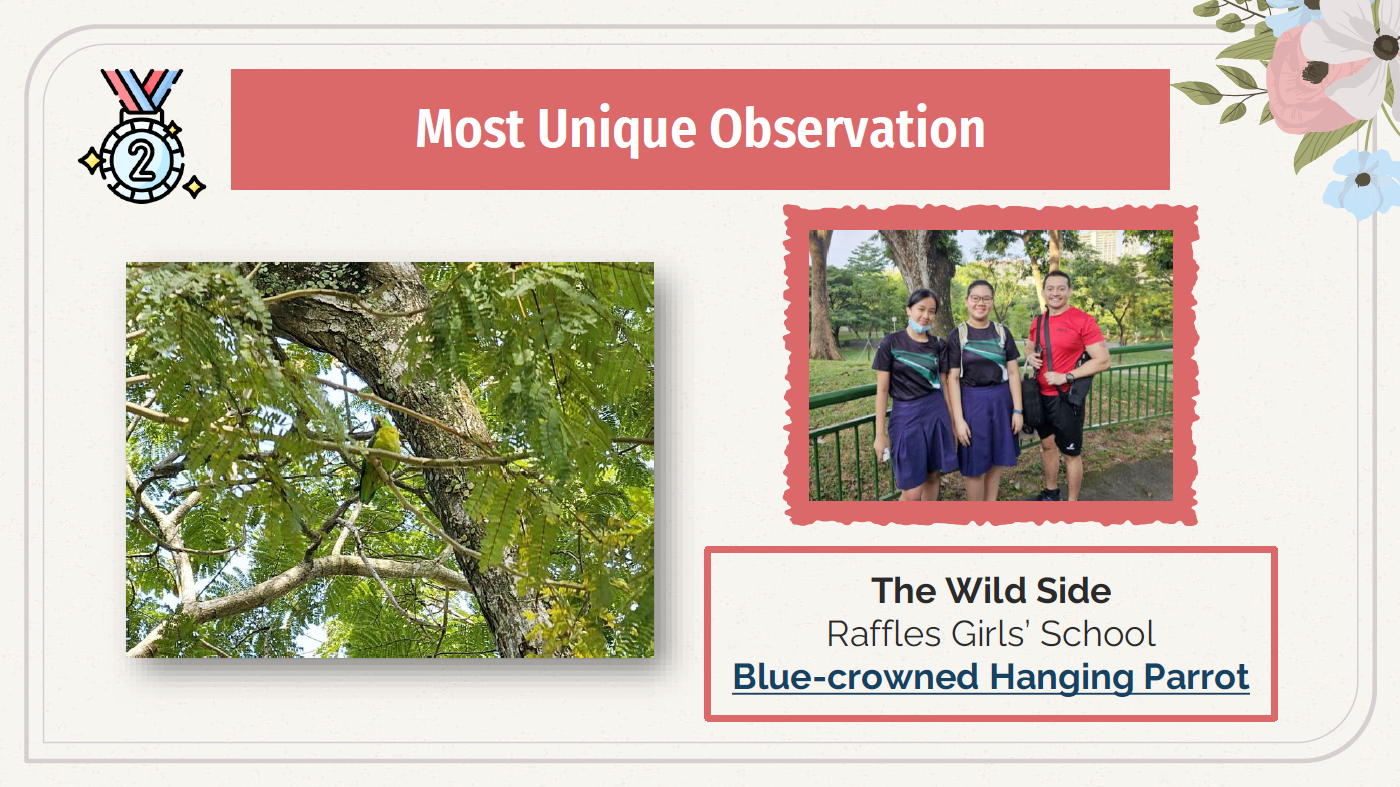
NSS ESN Biodiversity Race 2023
Organised by Nature Society Singapore (NSS), the annual Biodiversity Race is part of NSS’ Every Singaporean A Naturalist (ESN) programme. The ESN programme aims to equip young citizen scientists with the knowledge and skills to identify and monitor our urban biodiversity.
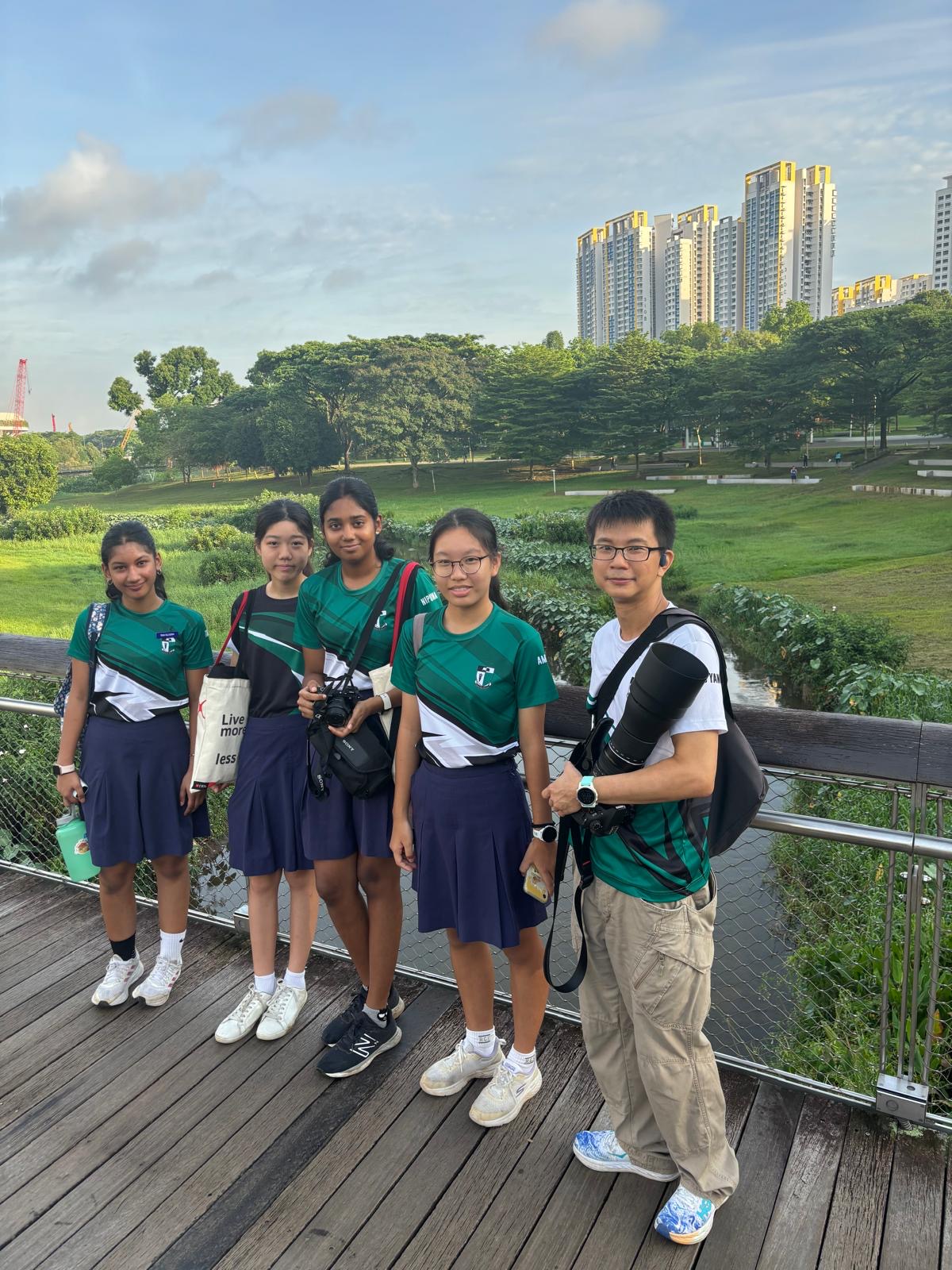
NSS ESN Biodiversity Race 2024
Students from TheWildSide, Cogitaire, and other passionate RGS girls showcased their skills in the 3rd NSS ESN Biodiversity Race on 29 May. The event featured 40 teams from 12 primary and secondary schools competing across six locations island-wide.
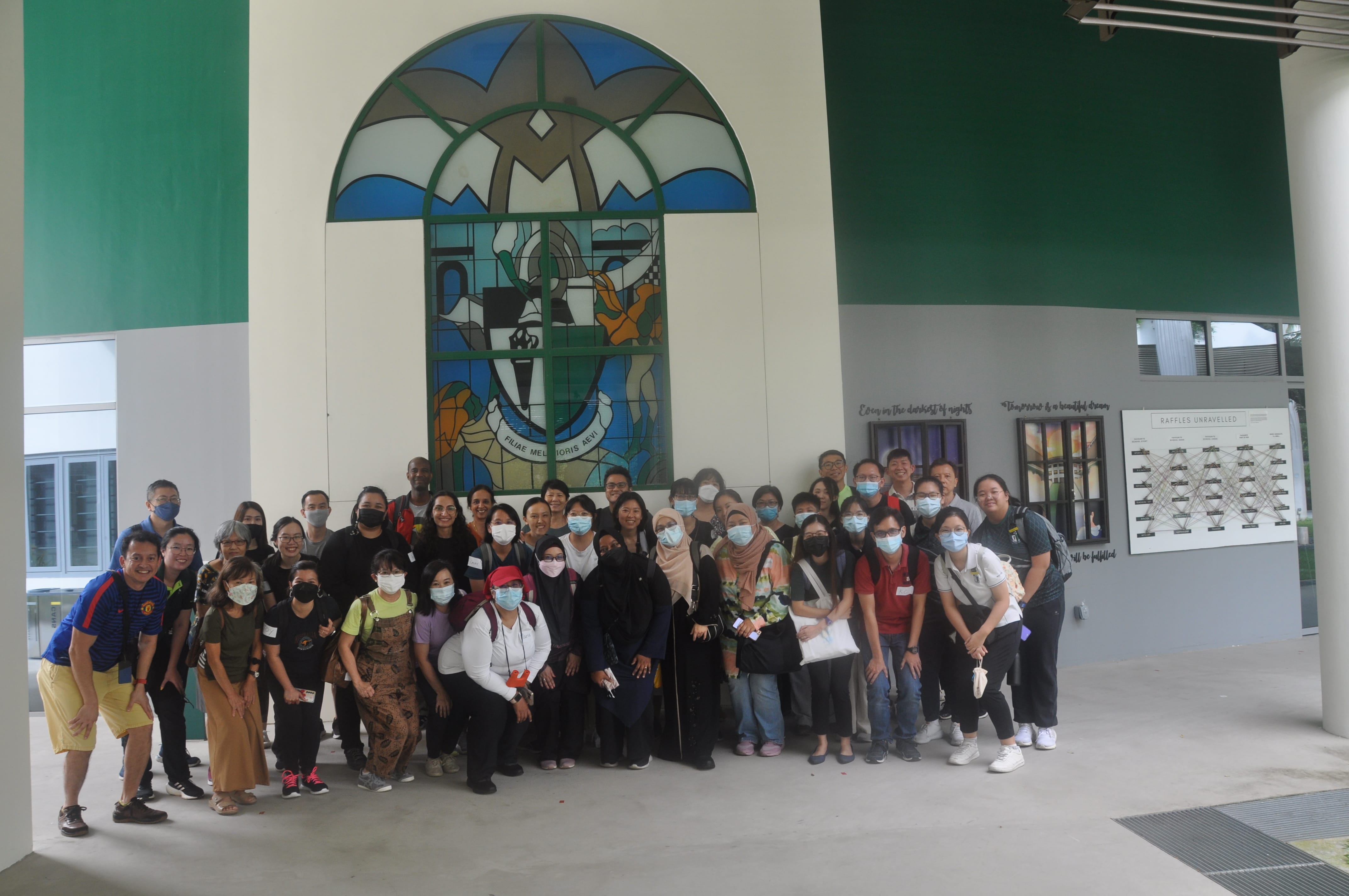
NSS Teacher Training Workshop in RGS
RGS hosted the Nature Society Singapore (NSS) annual teacher training workshop from the 24 - 25 November 2022. The 47 participants consisted of teachers from pre-schools, primary schools, secondary schools and international schools.
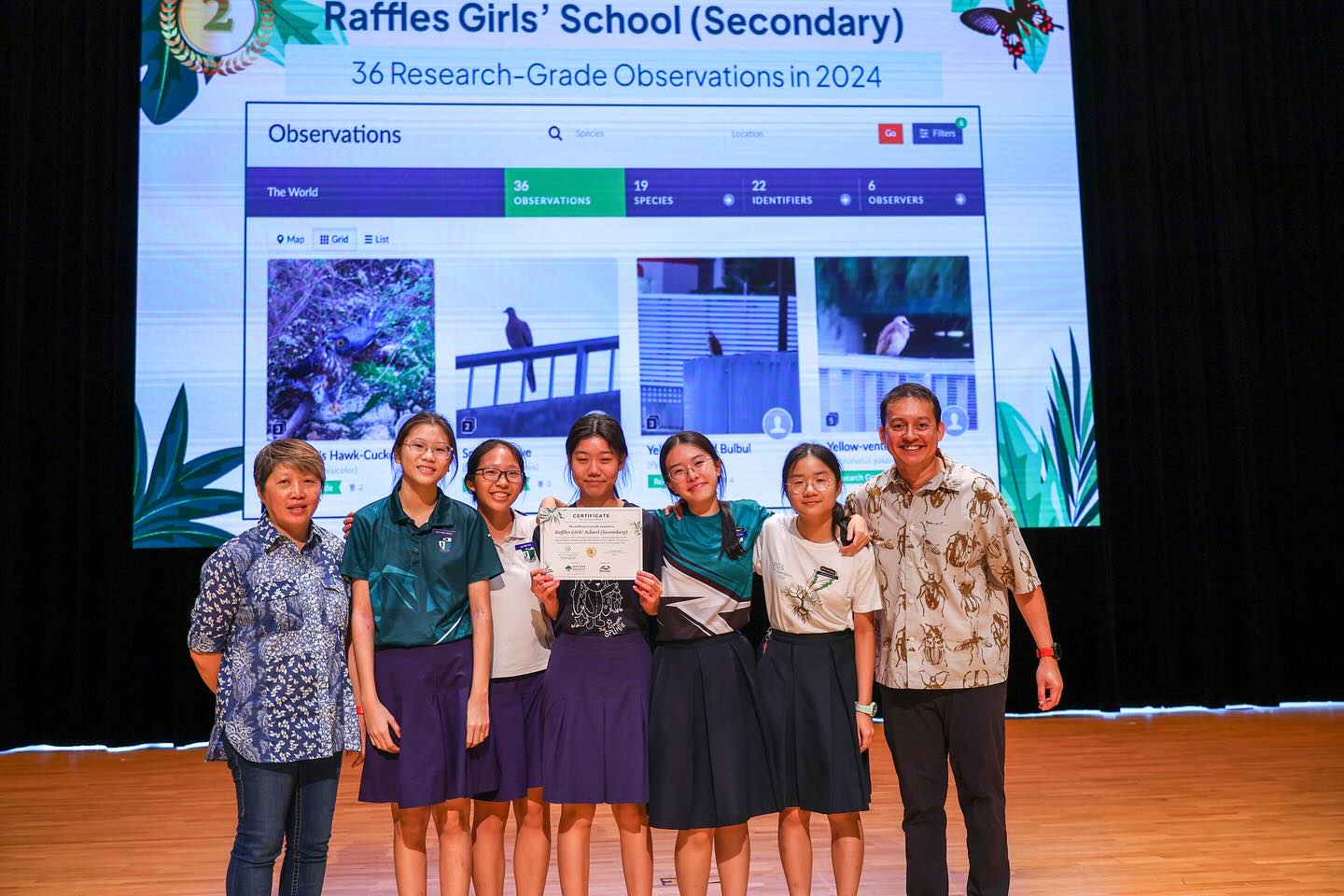
NSS ESN 3rd Sypmosium 2024
RGS hosted the NSS ESN Annual Symposium, a platform for sharing experiences, findings, and recognising the achievements of schools, students, and teachers. Participants engaged in pre-symposium activities, including booths hosted by our students.
Transect
RGS is home to a rich diversity of bird species, with regular bird transects conducted around campus to observe and document avian life. These transects provide valuable insights into local biodiversity and foster a deeper appreciation for nature among students and staff.
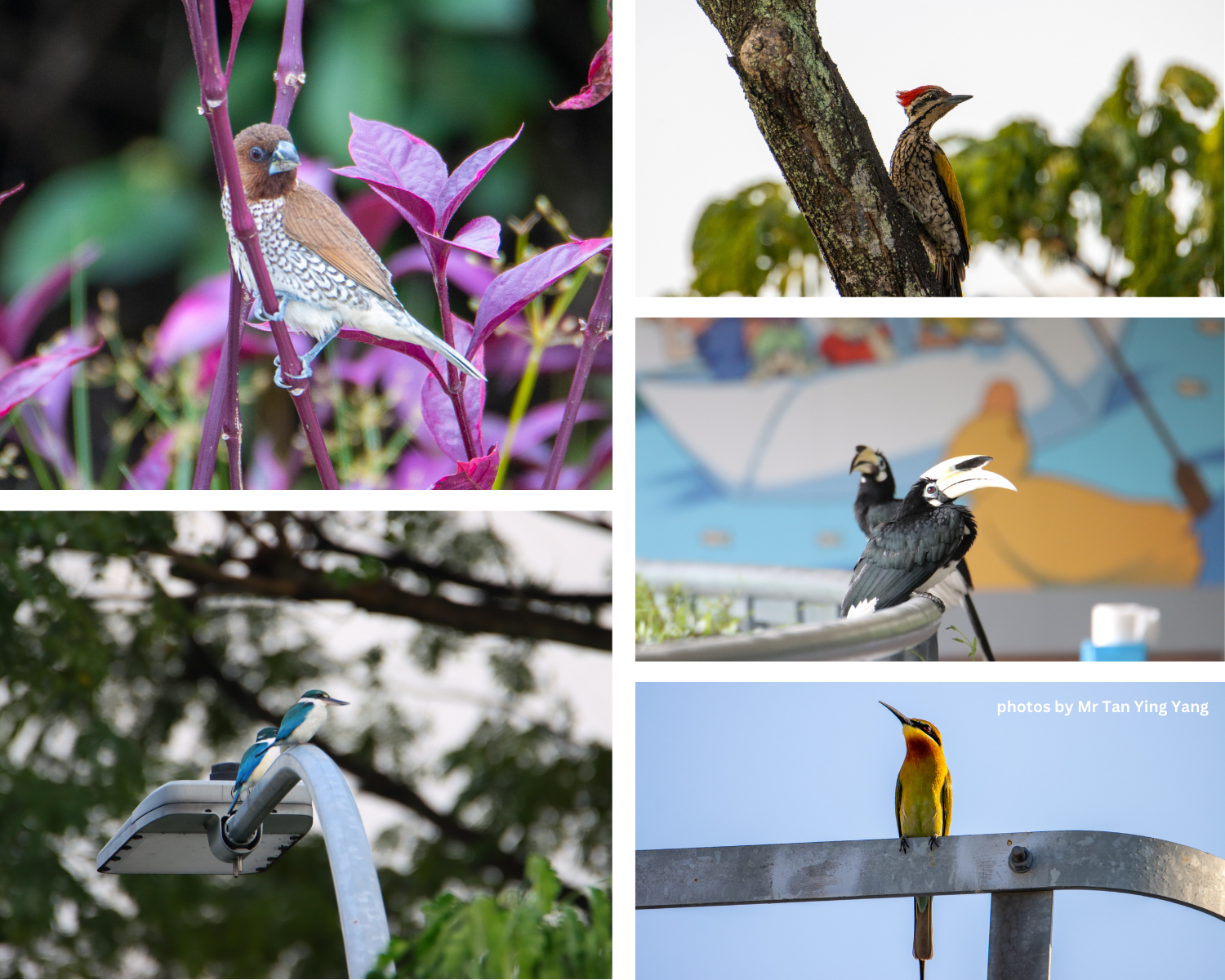
Recent observations have recorded fascinating bird species, including the vibrant Ornate Sunbird, the striking Collared Kingfisher, and the majestic Oriental Pied Hornbill. These sightings highlight the ecological richness of our green spaces and the importance of conservation efforts within our urban environment.
Butterfly Garden
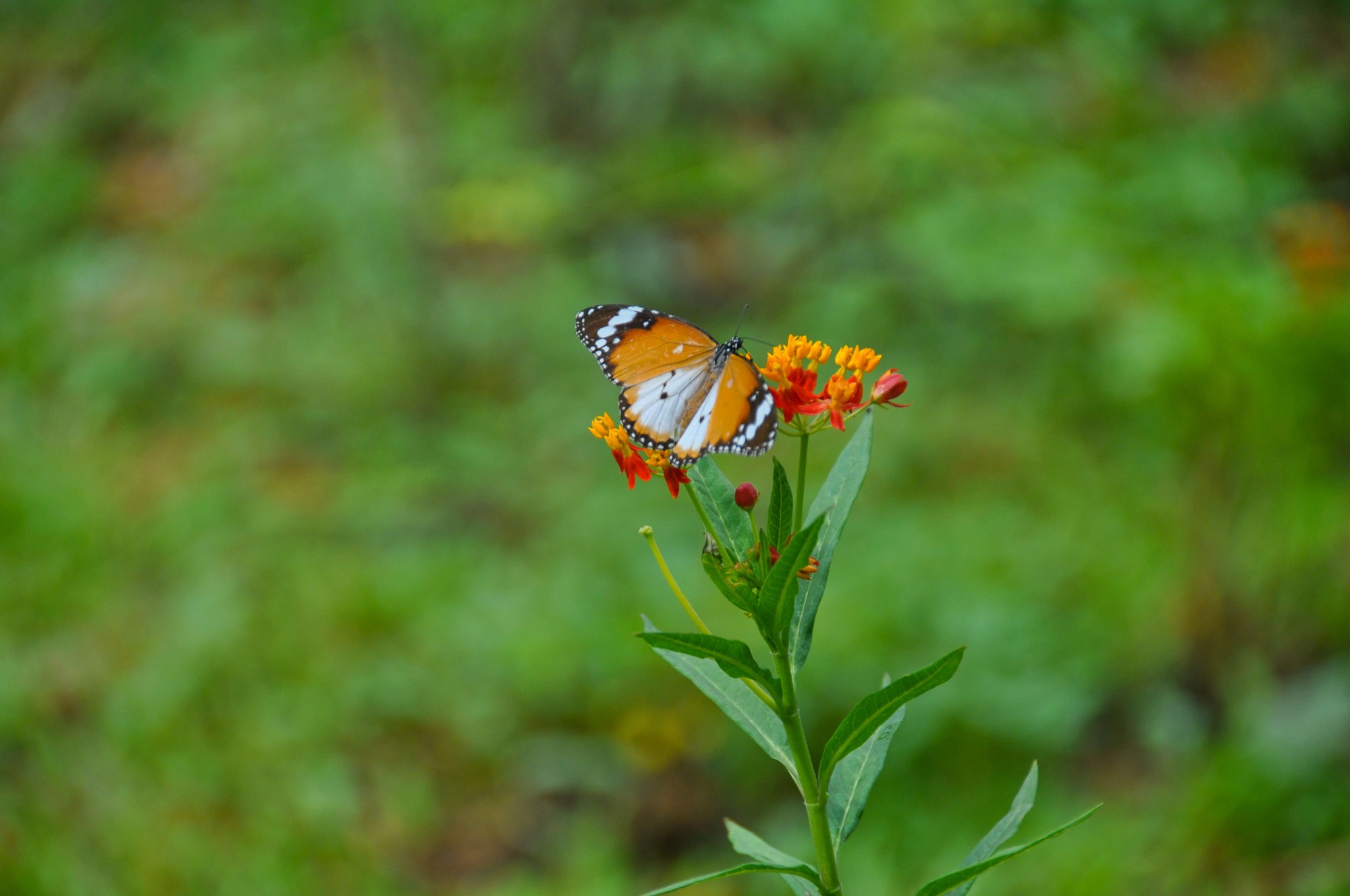
As part of a green initiative by the RGS Cogitare Club (a Mathematics, Science and Environmental CCA in RGS), a Butterfly Garden was officially launched to:
Create a colourful and green space for staff and students alike to learn about and enjoy nature
Increase awareness of green spaces in RGS
Protect butterflies, bees and other pollinators (these species, while vulnerable, are essential in the reproduction of many flowering plants, preserving the genetic diversity of the garden by allowing natural selection to continue to take place)
Launch of the RGS Butterfly Garden
Solar Energy
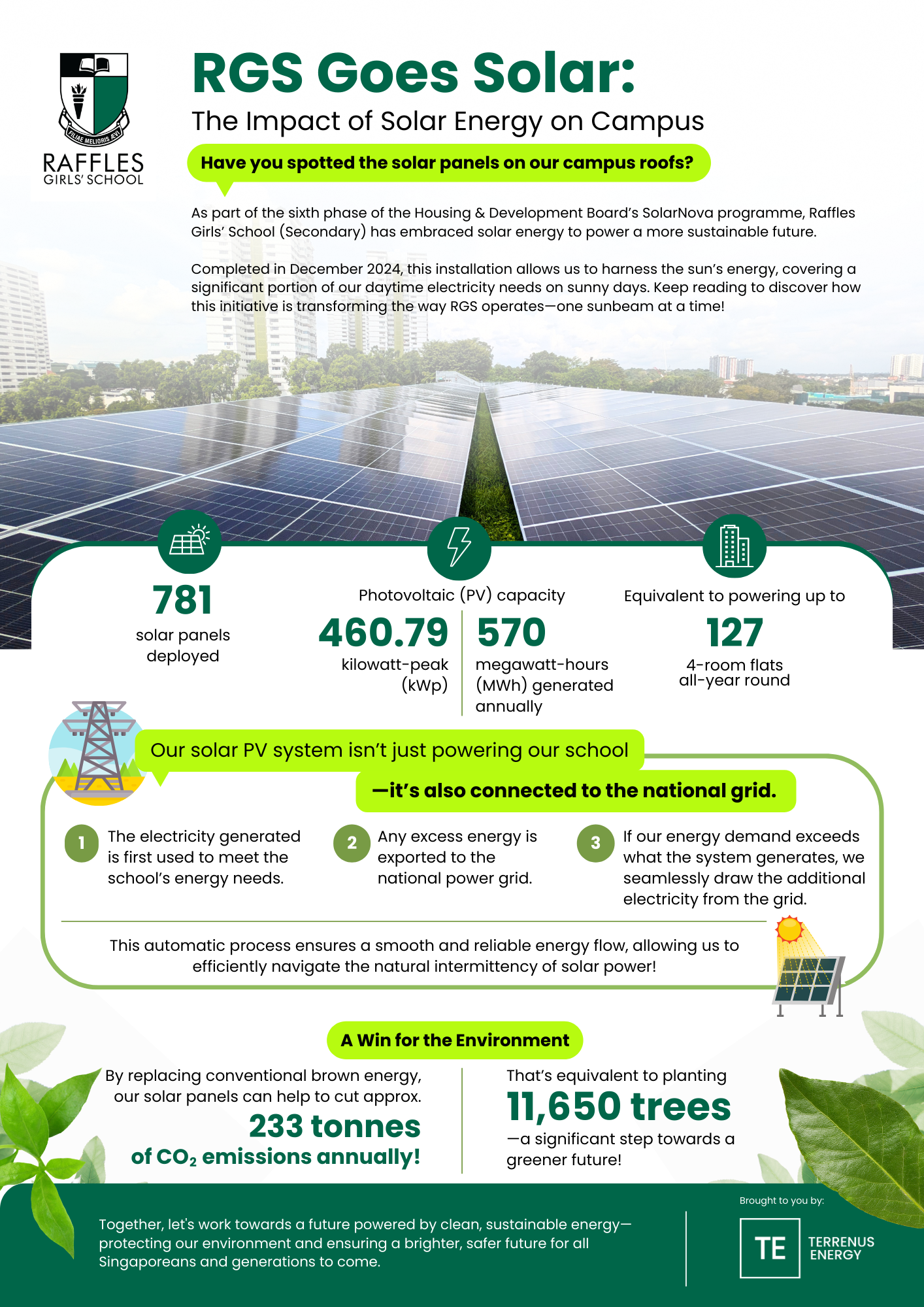
In December 2024, RGS completed the installation of solar panels on our campus roofs, allowing us to harness renewable energy and cover a significant portion of our daytime electricity needs. Any excess energy generated is exported back to the national power grid, contributing to the nation's clean energy efforts.
Energy generation and usage can be monitored through a Solar Dashboard, supporting sustainability efforts within our school community.
International Coastal Cleanup Singapore (ICCS)
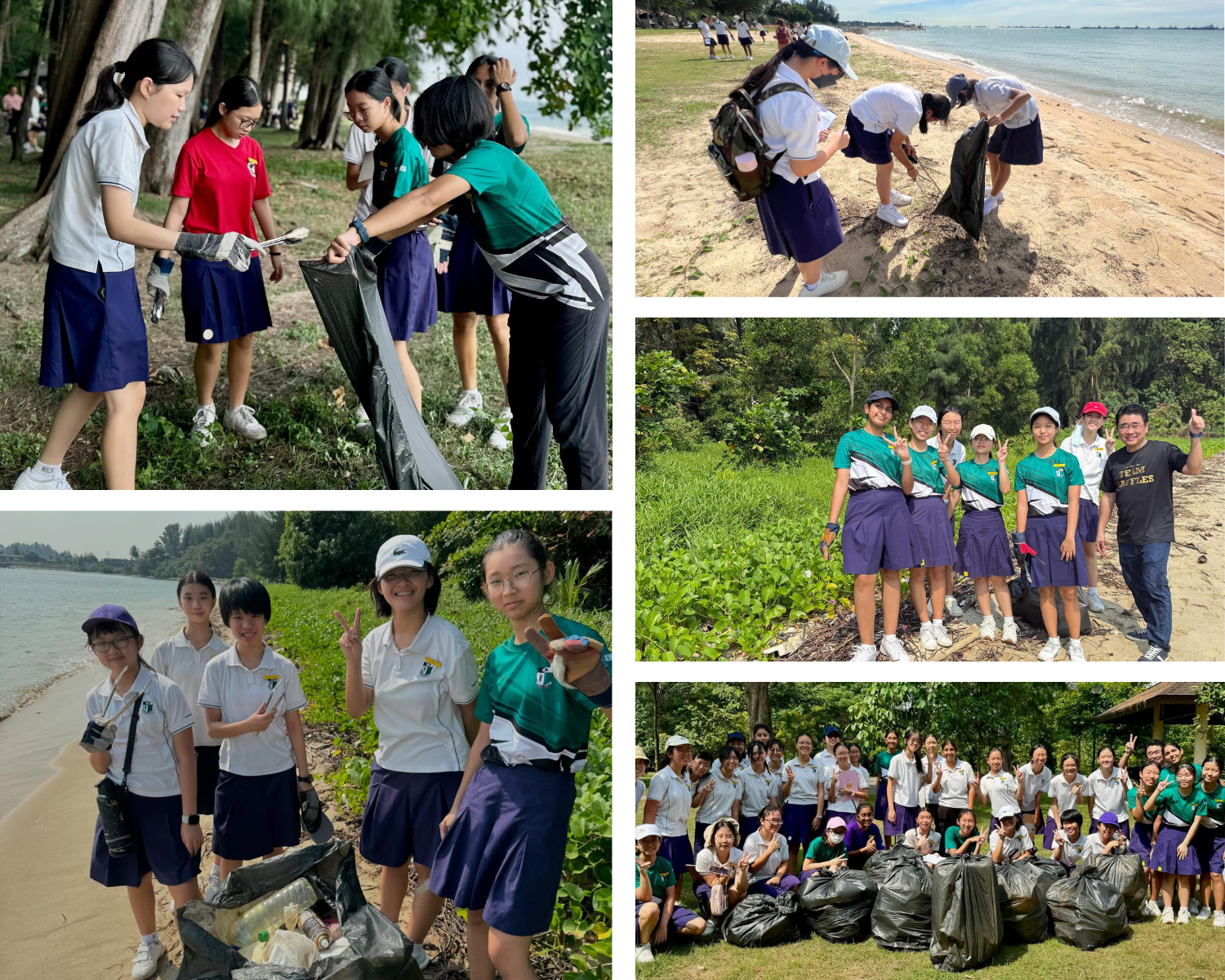
RGS has been part of the International Coastal Cleanup Singapore (ICCS) since its inception in 1992 and continues to do so. Our students contribute by collecting, analysing, and disposing of beach litter, playing a role in environmental conservation and helping to keep our beaches litter-free. Parent volunteers also accompanied their daughters and actively participated in the event.